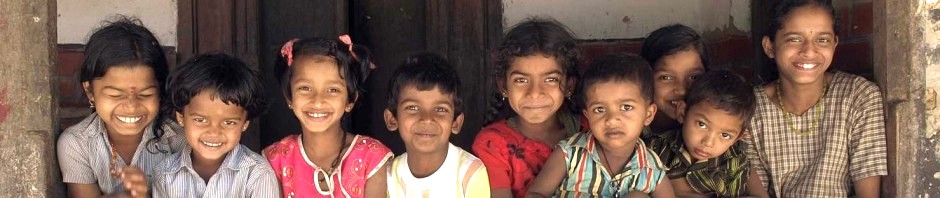
This website is all about “Showcasing new initiatives in education”, inspired by a fundamental commitment to human rights by India’s founding fathers:
“India is a secular state with a constitution committed to the unique demography, history and culture of each state and union territory.” – Constitution & Fundamental Rights >>
“The State shall not discriminate against any citizen on grounds only of religion, race, caste, sex, place of birth or any of them.” – Constitution of India & National Human Rights Commission >>
“In Nehru’s view, the process of modernization must not be taken as forcing a sudden break with the tribals past but help them build upon it and grow by a natural process of evolution.” – Tribal Philosophy and Pandit Nehru >>
This view is being upheld by leading educators to this very day:
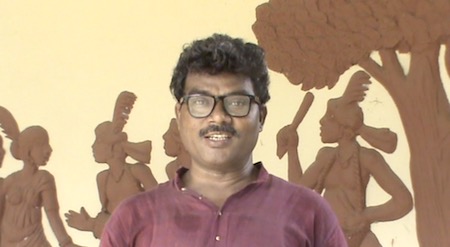
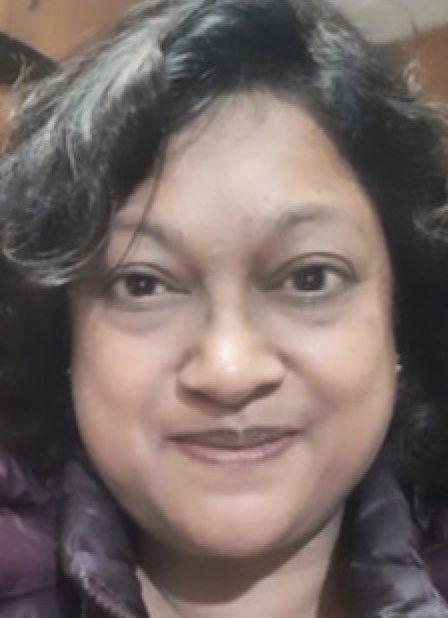
“We live in a world of rapid development in the media and everyone has different influences from where they live and change in different directions.” – Santali poet, scholar and translator Dr. Ivy Imogene Hansdak >>
“The biggest problem is illiteracy. If there is one thing I want to see is that the future generations do not suffer like my parents did.” – Santali teacher Kalidasi Mardi (a graduate of Visva-Bharati University) >>
“The primary identity of every citizen of India, over and above all other identities of religion, caste, language, race and suchlike, is that of an Indian.” – Romila Thapar (Emeritus Professor of History, Jawaharlal Nehru University >>
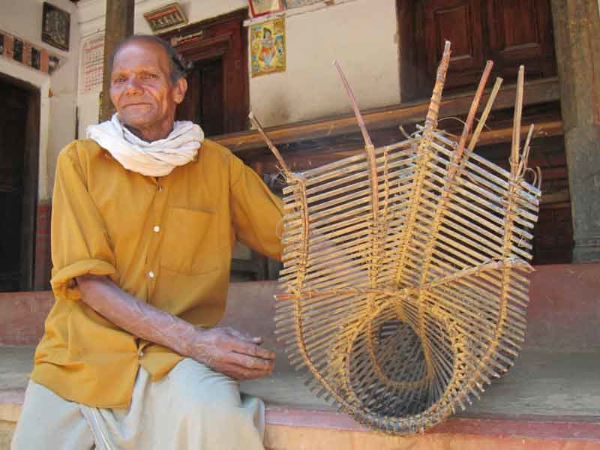
Photo © Arun VC >>
On the occasion of commemorating Mahatma Gandhi, the Vice President of India referred to a necessary and long overdue step, in India as in the rest of the world: “we shall first have to give up this hubris of considering tribes backward. Every tribe has a rich and living cultural tradition and we must respect them […] not only social courtesy to respect their cultural traditions but it is also our Constitutional obligation. As we are looking for ways of sustainable development, these groups can teach us lessons in sustainable development. […] There can’t be a better example of Unity in Diversity.”
Noted development economist Jean Dreze put it this way: “If we are to develop the culture of cooperation and solidarity, we need to take a leaf out of the tribal way of life. The rich tradition of democratic living in an adivasi society is a useful source of hope and inspiration.” – Gopinath Mohanty Memorial Lecture “The Adivasi Way of Life: Relic of the Past or Wave of the Future?”
On similar lines, it is worth paying attention to a special video message by M.S. Swaminathan – India’s foremost authority on food security – who reminded his fellow citizens that the nation’s ‘primary conservers’ often are tribal farmers. This fact explains the motivation of scientists working for the pioneering foundation he established keen on letting the world know why these ‘guardians of biological diversity’ are entitled to protection under the law known as Biodiversity Act (published by the National Biodiversity Authority). Whether or not they remain in a position to fulfil this important role depends on the implementation of the Scheduled Tribes and Other Traditional Forest Dwellers (Recognition of Forest Rights) Act passed in 2006, commonly known as the Forest Rights Act (FRA).
Adivasi communities: stewards of India’s cultural heritage and biodiversity
[…] India’s tribal communities — over 104.5 million people, or 8.6 per cent of the population — remain among the most marginalised despite decades of welfare schemes and development promises. In states such as Chhattisgarh, Jharkhand, Bihar, Rajasthan and Odisha, tribal districts consistently record higher poverty levels than non-tribal areas, even as these regions supply land, forests and minerals for the country’s growth. These communities have often been compelled to relinquish their lands for large-scale infrastructure projects, resulting in the erosion of their identity, livelihoods, and future prospects.
It is crucial to recognise the value these communities bring, particularly their eco-friendly lifestyles, which offer important insights into addressing climate-related challenges. For instance, during the 2018 drought in Sundergarh, Odisha, a visit to a remote tribal village revealed thriving vegetation and effective water-harvesting systems. Kiri village in Lahunipara block of Sundergarh district, inhabited by the Paudi Bhuyan community — a Particularly Vulnerable Tribal Group (PVTG) — has demonstrated remarkable resilience.
This observation underscores the importance of learning from traditional ecological knowledge, especially sustainable farming practices that rely on drought-resistant and indigenous seeds.
Adivasi communities, as stewards of India’s cultural heritage and biodiversity, must be central to the nation’s development narrative. Their lives are intricately linked to land, forests and water, yet they face growing threats from climate change, livelihood insecurity and displacement. Addressing these challenges requires more than welfare initiatives; it demands robust enforcement of constitutional rights, substantial public investment and the strengthening of Gram Sabha–based governance. […]
Source: “Union Budget must shift from welfare to rights-based public investment for Adivasi communities” by Debabrat Patra, Sion Kongari & Saurabh Kumar, Down to Earth, 9 February 2026
URL: https://www.downtoearth.org.in/governance/union-budget-must-shift-from-welfare-to-rights-based-public-investment-for-adivasi-communities
Date Visited: 30 June 2026
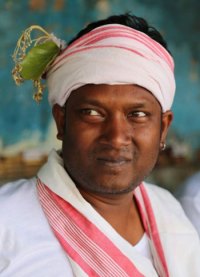
“We have to write our own stories, about our issues, from our own perspectives.” – Abhay Xaxa, a “Fiercely Unapologetic Adivasi Scholar-Activist” | Read more >>
“We are so much more than that. We follow a tradition rich in music, dance and love.” – Author Swarnalatha whose NGO works for the upliftment of her Irula community | SafeSearch (Irular) >>
Continue your exploration of India’s tribal cultural heritage by …
taking a guided tour of this website
browsing what’s new and interesting
listening to music (both traditional and contemporary)
exploring other audio resources and video contents from various sources
reading and discussing books on tribal culture
making good use of (open access) eBooks and eJournals
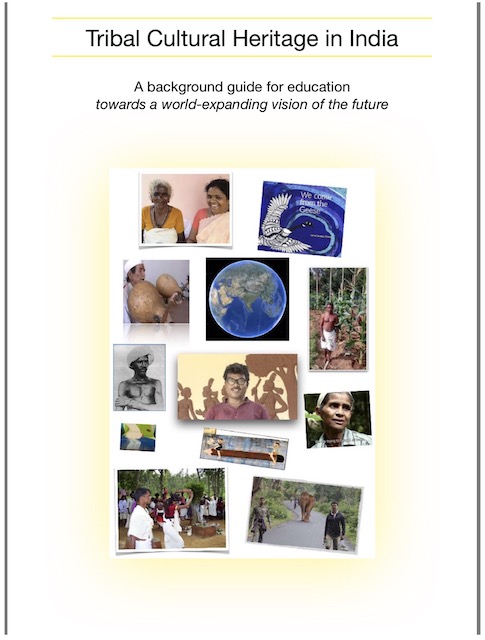
downloading the free Background guide for education
getting inspired by success stories
getting a better understanding of India’s tribal heritage by paying attention to those who actually carry it forward
… and deepen your understanding by
immersing yourself in the storytelling traditions valued among tribal communities
searching for Indian publications by and about members of tribal communities
asking questions like “How many ‘Scheduled Tribes’ are there in India?”; and “What distinguishes them from other communities?” (‘tribal’ or otherwise)
understanding the intentions of India’s founding fathers: Gandhi & Nehru
deriving inspiration from Rabindranath Tagore and his vision of rural culture – even in the face of poverty and deprivation
finding posts with information about a particular community
using an interactive map to find museum collections across India
Take a moment to contemplate what it means to become a “free person” – to begin with, girls and boys no longer deprived of their childhood, proper education in their own mother tongue, food or health care:
“He who has not surrendered his free will and abdicated his intelligence and independent thinking, who does not blindly act on the teachings of others, who does not blindly accept anything without critically analysing and examining its veracity and usefulness […] I call him a free man.” – Bhimrao Ramji Ambedkar who was more than the “drafter of the Constitution” quoted in Journal of People’s Studies >>
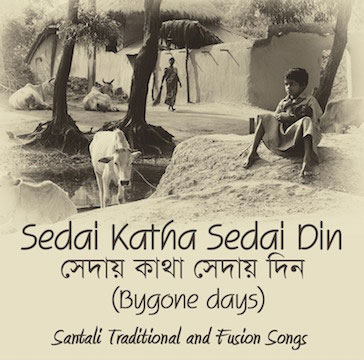
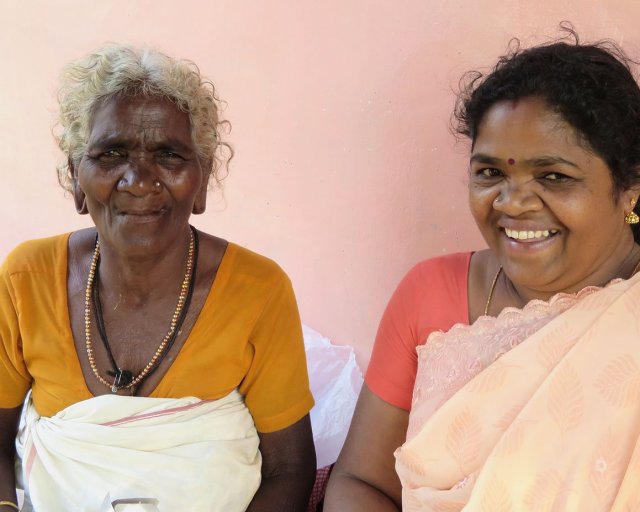
“The forest in Shanthi Teacher’s classroom” on Ruralindiaonline.org >>
More about Tribal elders & Women >>
Success stories >>
“National development and the development of tribal communities are linked to each other” – Droupadi Murmu | Learn more >>
“Tribal communities are a standing example of how women play a major role in preservation of eco historic cultural heritage in India.” – Mari Marcel Thekaekara (writer and Co-Founder of ACCORD-Nilgiris) | Learn more >>
“When you are leaving 60 percent of the people behind, you cannot have the ambition to be an economic power.” – Poonam Muttreja (Executive Director of the Population Foundation of India) >>
“Women and girls are disproportionately affected by modern slavery. As they transition through childhood, adolescence and adult life, the impacts of discrimination multiply and gender inequality grows.” – Walk Free Foundation | Learn more >>
“There is no social bias against women in tribal communities such as there exists among the middle castes, especially landed ones. Women can ask for a divorce, and in many communities, money is paid to the girl’s family at the time of marriage.” – Abhay Bang, the award-winning doctor and social activist from Gadchiroli in Maharashtra | Learn more >>
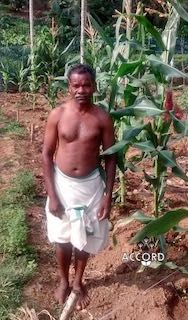
Photo © Accord Gudalur in
Gardening their way to Good Health >>
The healthier tribal ‘food basket’ >>
More tips
A virtual journey across time and space: from Gondi-Harappan to present & future
Thank you for your interest, suggestions and other feedback!
Credits
Banner photo and art: courtesy Arun VC (Kerala)